
Table of Contents
Introduction
If you’ve ever landed on a factory’s website or scrolled through a manufacturing brand’s LinkedIn page and instantly felt a sense of trust, it’s usually because the visuals felt real and authentic. Those images often come from industrial photography. For someone new to this field, it might sound complex at first, but in reality, it’s simply about showing how industries actually work honestly and visually.
This guide is meant for business owners, marketers, and beginners who want to understand what this type of photography is, why it’s important, and how it fits into today’s branding and marketing efforts. You don’t need any technical photography knowledge to get started just curiosity and an interest in real-world visual storytelling.
What Is Industrial Photography?
In simple words, industrial photography is about showing real workplaces as they are. It captures factories, manufacturing units, warehouses, and construction sites in their natural working state. There’s no posing or artificial setup just real machines running, real people working, and real processes happening. The focus is on honesty, not on making things look perfect.
Unlike fashion or lifestyle shoots that aim to look stylish or emotional, this type of photography highlights the true scale of operations, attention to detail, and hard work behind the scenes. It helps people clearly understand how products are made, how systems function, and how teams work together inside an industrial environment.
Explained in Simple Words
This style of photography shows the real strength of a business. It captures machines while they are working, workers focused on their tasks, and well-managed spaces that show how smoothly operations run. Through these visuals, people can quickly sense a company’s professionalism, scale, and reliability without needing long explanations or technical descriptions.
What Comes Under This Category?
It generally includes places like factories, heavy machinery setups, warehouses, power plants, infrastructure sites, and construction projects. Many companies also use it to capture their internal processes, such as quality inspections, packaging activities, and day-to-day logistics, to show how smoothly their operations work.
Why Is Industrial Photography Important for Businesses?
In today’s digital-first world, visuals are often the first thing people notice when they come across a brand. Professional industrial visuals play a major role in shaping that first impression, especially for B2B and manufacturing-focused companies.
High-quality images create transparency. They show actual facilities, real teams, and genuine processes, which helps build trust and confidence among clients, distributors, investors, and even people looking to work with the company.
Building Trust and Credibility
Stock images often look polished but don’t feel real. They can seem generic and unrelated to how a business actually works. Original factory visuals, however, feel more genuine. When a company shows its real production floor and daily operations, it clearly communicates honesty and transparency qualities that matter a lot in industrial and manufacturing markets.
Supporting Marketing and Sales
From websites and brochures to LinkedIn posts and trade show displays, real industrial visuals make communication more effective. They help sales teams clearly show what a company is capable of, and they give marketers content that feels authentic and trustworthy to business decision-makers.
Types of Industrial Photography
Although the goal stays the same, this type of industrial visual documentation can be grouped into different categories depending on what is being captured, such as production environments, machinery, processes, or people at work.
Manufacturing and Factory Photography
This focuses on production lines, machinery operations, and plant infrastructure. It helps businesses demonstrate capacity, efficiency, and scale.
Product and Machinery Photography
Here, the emphasis is on industrial equipment, tools, and components. These visuals are commonly used in catalogues, presentations, and technical documents.
Process and Workflow Documentation
This captures step-by-step operations such as assembly, testing, and quality control. It is especially useful for explaining systems and highlighting operational discipline.
Industrial Portraits
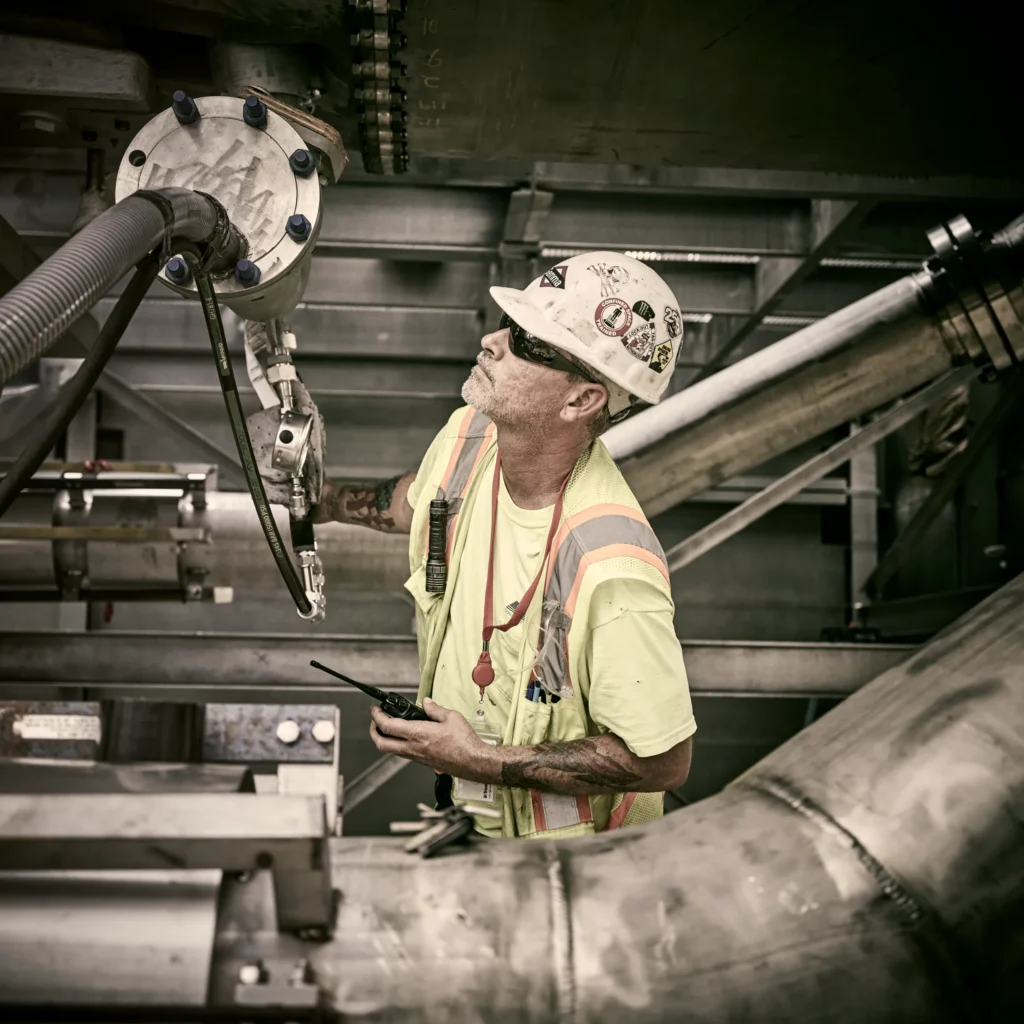
These are professional portraits of engineers, technicians, and workers in their actual work environment, often wearing safety gear. They humanize industrial brands by showing the people behind the processes.
Industrial Photography vs Commercial Photography

Many beginners often get confused between industrial visual photography and commercial photography. Despite serving business purposes, the planning and execution of both types of photography differ significantly.
Commercial shoots are usually designed to create an emotional connection, with carefully controlled lighting, models, and styled setups. In contrast, industrial shoots focus more on realism, accuracy, and documenting real operations as they happen. The locations are often tough to work in, and safety rules play a very important role throughout the shoot.
Knowing this difference helps businesses decide which visual style suits their goals and communicates their message in the most effective way.
Essential Equipment Used in Industrial Photography
Creativity definitely matters, but in industrial shoots, good preparation and hands-on experience are just as important, mainly because the working environments can be tough.
Photographers usually rely on professional cameras that handle low-light conditions well. Wide-angle lenses are useful for showing large spaces, while standard lenses are better for capturing processes and people at work. Lighting is handled carefully so the scene looks natural without interrupting daily operations. Along with this, safety gear like helmets and protective shoes is essential, and following on-site rules is something that cannot be ignored.
Challenges in Industrial Photography
This field also has some real-world challenges that beginners should understand from the start.
Poor lighting, high temperatures, dust, and constant noise can make shoots physically tiring. Many locations have limited access, and strict safety regulations limit movement and camera angles. Because of this, good planning and a clear understanding of the work environment are essential for getting successful results.
How Industrial Photography Supports Digital Marketing
In today’s marketing landscape, professional industrial visuals are more than just records of work; they become a strong brand asset.
They help build credibility on websites, especially on “About Us” and infrastructure-related pages where trust matters most. On platforms like LinkedIn, these visuals support authority building and position a brand as knowledgeable and reliable. In business proposals and presentations, they act as clear visual proof of capability and scale.
Such visuals help manufacturing and B2B brands stand out in competitive markets, where decision-makers value authenticity and trust far more than flashy or over-styled imagery.
Industrial Photography for Beginners: How to Get Started
If you are new to industrial photography, the best starting point is learning how industries actually function. Understanding machines, workflows, and safety norms improves both visual quality and storytelling.
Begin with smaller workshops or local manufacturing units. Focus on clear composition, useful angles, and storytelling rather than perfection. With time and experience, technical confidence and professional judgement naturally develop.
How to Choose the Right Industrial Photographer
From a business perspective, choosing the right professional for an industrial photo shoot is a crucial decision. It’s important to work with someone who has real experience in industrial settings, not just general photography knowledge.
Going through their past projects, understanding how they plan a shoot, and seeing how well they connect visuals with business objectives are good signs that you’re dealing with a reliable and capable professional.
Common Myths About Industrial Photography
Many people think this type of photography is dull or repetitive, but that’s far from the truth. When done well, it tells strong stories about human skill, innovation, and the scale at which industries operate.
Another common belief is that mobile phone photos are enough. While phones work fine for quick updates, professional shoots offer better consistency, detail, and credibility something casual images simply can’t deliver.
Final Thoughts
For manufacturing and infrastructure-driven businesses, this kind of visual work isn’t a cost it’s an investment. Industrial photography helps build trust, establish authority, and strengthen long-term brand value by clearly showing how a business actually operates on the ground.
For beginners, learning this field opens the door to a focused and high-value creative space. Whether you’re a business owner wanting to showcase real operations or a creative professional exploring a serious niche, understanding the basics is the first step towards honest and impactful visual storytelling.
If you’re planning to capture your factory, plant, or operations the right way, PhotophactoryStudios can help you transform real work into powerful visual stories that build confidence and credibility.